Learn
Recycling, explained for South Australia.
What the numbers on plastic mean, which bin things really go in, how the 10c refund works, and what happens to plastic after you sort it.
Bin rules differ between councils. This page covers the general SA guidance. For your street, check Which Bin SA or call the Which Bin line on 1300 137 118.
Plastic codes guide
Read the number, not the colour
The number inside the triangle is a resin identification code. It tells you what type of plastic something is. It doesn't promise your bin will take it.
Same colour, different plastic
Any plastic can be dyed any colour, so colour tells you nothing about what it's made of. Two white bottles can be completely different plastics. Flip the item over and find the code, usually moulded into the base or inside the lid.
Polyethylene terephthalate
Yellow bin, if rigidTap to flip
High-density polyethylene
Yellow bin, if rigidTap to flip
Polyvinyl chloride
Some items onlyTap to flip
Low-density polyethylene
Not in kerbside binsTap to flip
Polypropylene
Yellow bin, if rigidTap to flip
Polystyrene
Not in kerbside binsTap to flip
Other plastics
Check item by itemTap to flip
The scrunch test
If plastic springs back to its shape and can hold water, it's rigid, and rigid containers go in the yellow bin. If you can scrunch it into a ball, it's a soft plastic: keep it out.
The code tells you the type. The scrunch test tells you the form. Kerbside bins care about both.
Which bin?
Test yourself
Ten everyday items. Tap the bin you'd use and see straight away whether you're right.
Item 1 of 10
Takeaway coffee cup
Which bin does it go in?
Score: 0
Container Deposit Scheme
Every eligible can and bottle is worth 10c
South Australia started Australia's first container deposit scheme in 1977. Take eligible empty drink containers to a collection depot and you get 10c back for each one. Clubs and charities raise money the same way.
Look for the refund mark on the label, such as “10c refund at collection depots when sold in SA”. Only containers bought in SA get the refund.
- Returned each year
- ~660 million
- Return rate, 2025–26
- 72%
Eligible now
- Soft drinks, water, sports and energy drinks up to 3 litres
- Beer, cider and pre-mixed (ready-to-drink) alcohol up to 3 litres
- Flavoured milk and pure fruit juice under 1 litre
- Wine and spirits in non-glass containers, like cans and small casks (size limits apply)
Not eligible (yet)
- Plain milk
- Wine and spirit glass bottles
- Undiluted cordial and concentrated juice
- Flavoured milk and pure juice in 1 litre or larger containers
Most of these can still go in your yellow bin. They just don't earn a refund.
Coming in 2027
The SA Government has committed to include all drink containers up to 3 litres, except plain milk and registered health tonics. That will add wine and spirit bottles, juice and cordial, and larger flavoured milk. It's targeted for 2027.
Tip: don't crush cans. Depots need to read the refund mark. Taking lids off helps too.
From kerbside to craft
How a milk bottle becomes a coaster
This is how ReCraft turns clean HDPE into products at small scale. Your yellow bin goes a different route: it's sorted by machine at a materials recovery facility, then sold to reprocessors.
- 1
Collect
Clean HDPE comes in from workshops, schools and drop-off tubs.
- 2
Sort
We check the resin code on every piece. If it isn't a 2, it's out.
- 3
Clean
Labels off, then washed and dried. Food or glue ruins a batch.
- 4
Shred
A shredder turns the pieces into small flakes, sorted by colour.
- 5
Melt or press
The flakes are heated until soft, then pressed into a sheet or a mould.
- 6
Make
Cooled sheets are cut, sanded and finished into useful things.
What it looks like
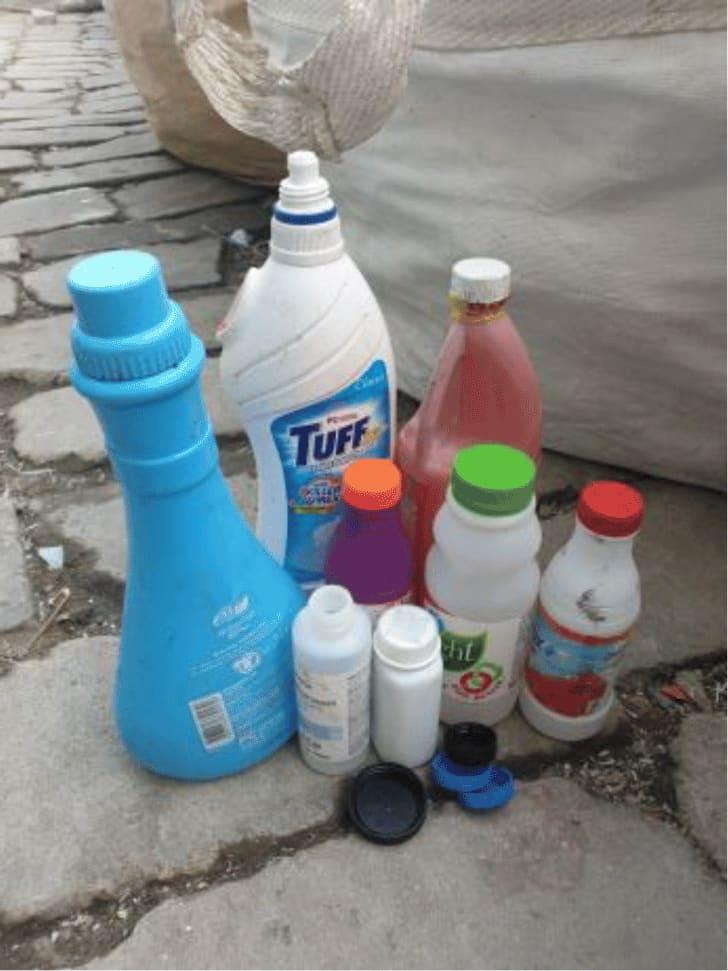
Collected HDPE bottles and containers“HDPE recycling” by Emmanuel M. Atienza, Richard M. De Jesus & Jason Maximino C. Ongpeng, CC BY 4.0, cropped to one panel, resized 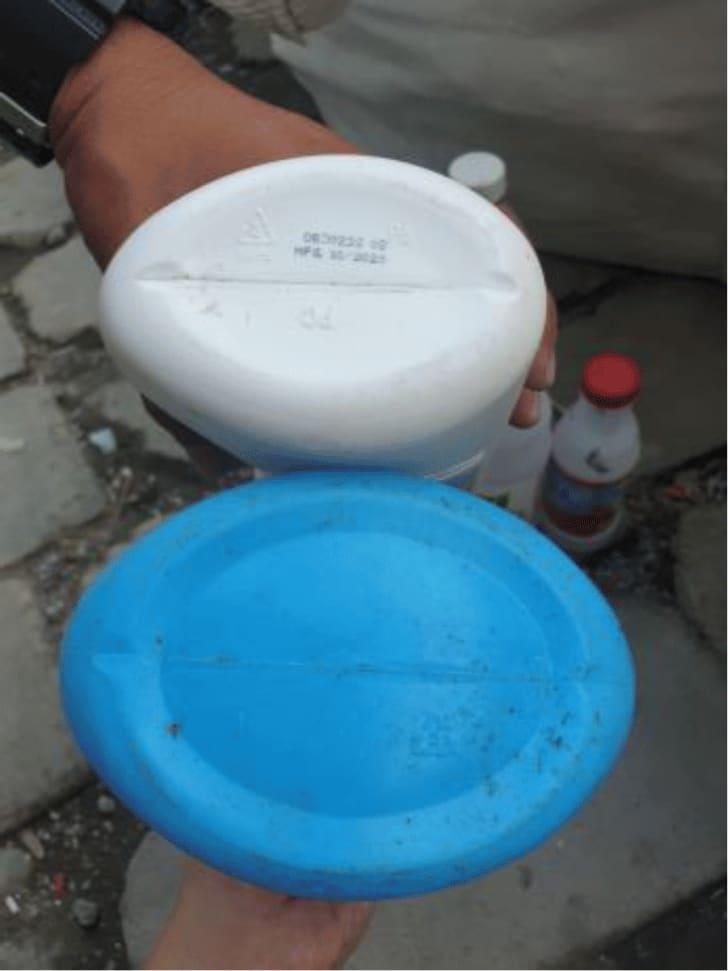
Checking the resin code on a lid“HDPE recycling” by Emmanuel M. Atienza, Richard M. De Jesus & Jason Maximino C. Ongpeng, CC BY 4.0, cropped to one panel, resized 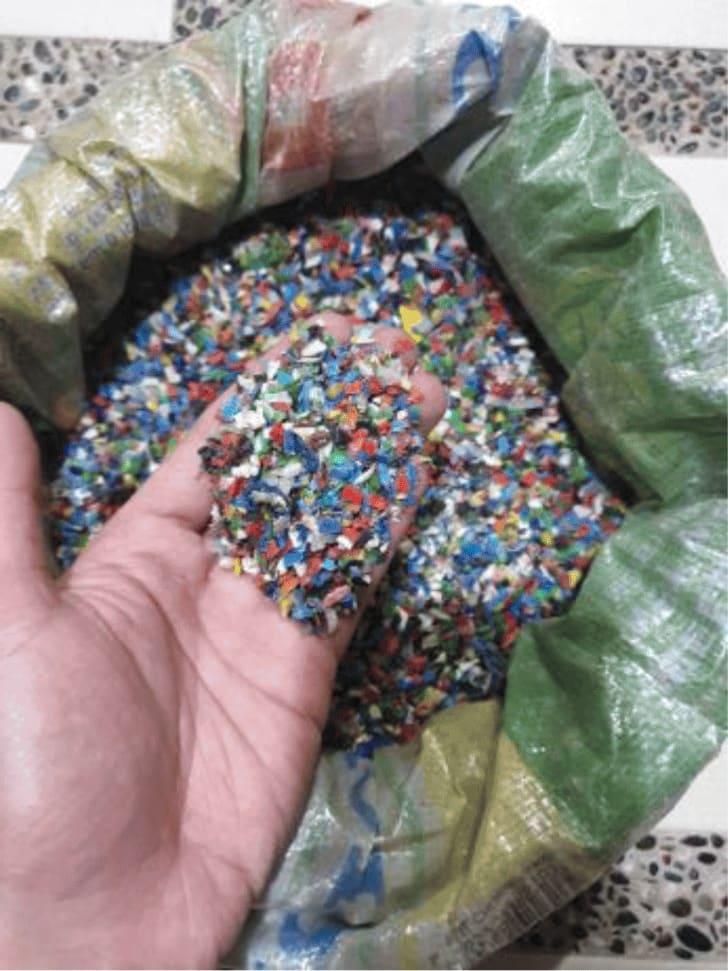
Shredded HDPE flakes“HDPE recycling” by Emmanuel M. Atienza, Richard M. De Jesus & Jason Maximino C. Ongpeng, CC BY 4.0, cropped to one panel, resized 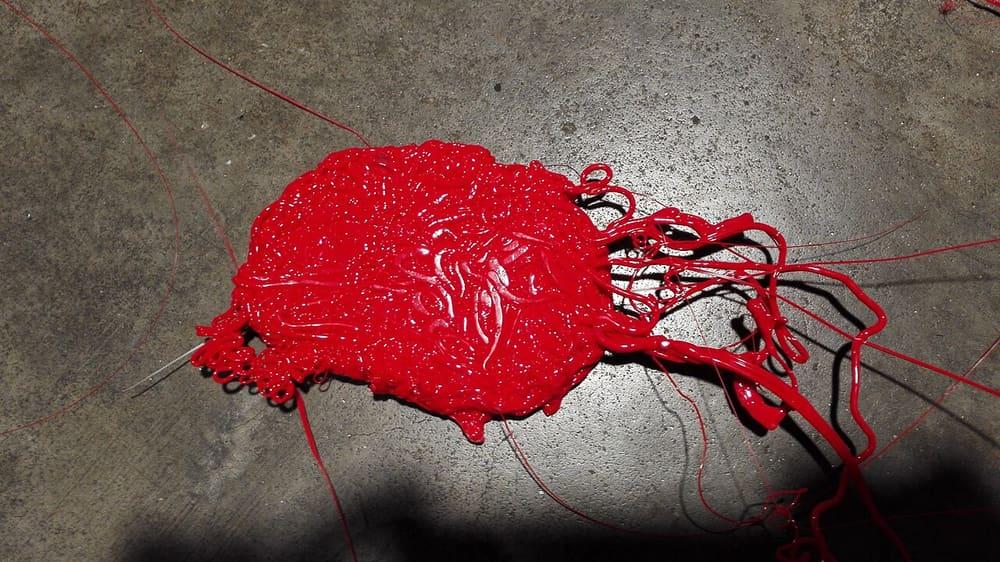
Melted plastic, purged from a moulding machine“Plastic Molding Purge Material” by Encik Tekateki, CC BY 4.0, resized 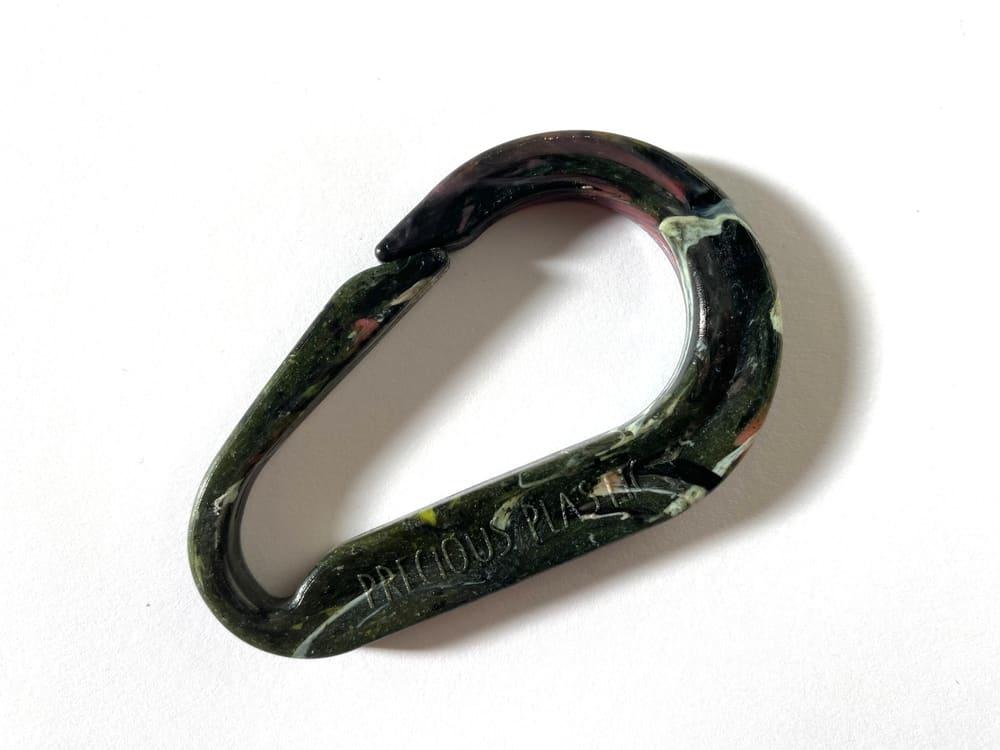
A carabiner made from recycled plastic“Precious Plastic carabiner” by Ezlev, CC0 1.0, resized
Myths vs facts
Five things almost everyone gets wrong
Tap a myth to flip it.
- Myth
“The number in the triangle means it's recyclable.”
Tap for the fact
- Myth
“Bag your recycling to keep it tidy.”
Tap for the fact
- Myth
“A greasy pizza box has to go to landfill.”
Tap for the fact
- Myth
“Takeaway coffee cups are paper, so they're recyclable.”
Tap for the fact
- Myth
“It all ends up in landfill anyway.”
Tap for the fact
Sources
Where these facts come from
Checked against official South Australian and national sources on 19 October 2026. Rules change, and they differ between councils, so check Which Bin SA for your area.
Photos are credited where they appear. Resin code symbols and illustrations are original artwork.
- 1.Which Bin SA (Green Industries SA): What do the numbers on plastics really mean?
- 2.Which Bin SA: Recycling from A–Z
- 3.Which Bin SA: Using your yellow recycling bin
- 4.Which Bin SA: Always in the green bin: greasy pizza boxes and other takeaway packaging
- 5.Which Bin SA: Drop it off: soft plastics
- 6.EPA South Australia: Container deposit scheme
- 7.EPA South Australia: Container deposit scheme FAQs
- 8.EPA South Australia: Spirit and wine glass bottles
- 9.EPA South Australia: List of beverages covered by the Environment Protection Act 1993 (PDF, updated August 2024)
- 10.Green Industries SA: Circular Economy Resource Recovery Report 2023–24
- 11.Green Industries SA: South Australia continues to lead on resource recovery (2022–23 figures)
- 12.Planet Ark (Recycling Near You): 5 most common recycling questions explained
- 13.Planet Ark (Recycling Near You): Australasian Recycling Label FAQ